Daron Rahlves, America’s winningest male downhiller of all time, is a skier for life.
Interview by Gordy Megroz for Cache_Seven
(Markus Berger care of © Red Bull Media House)
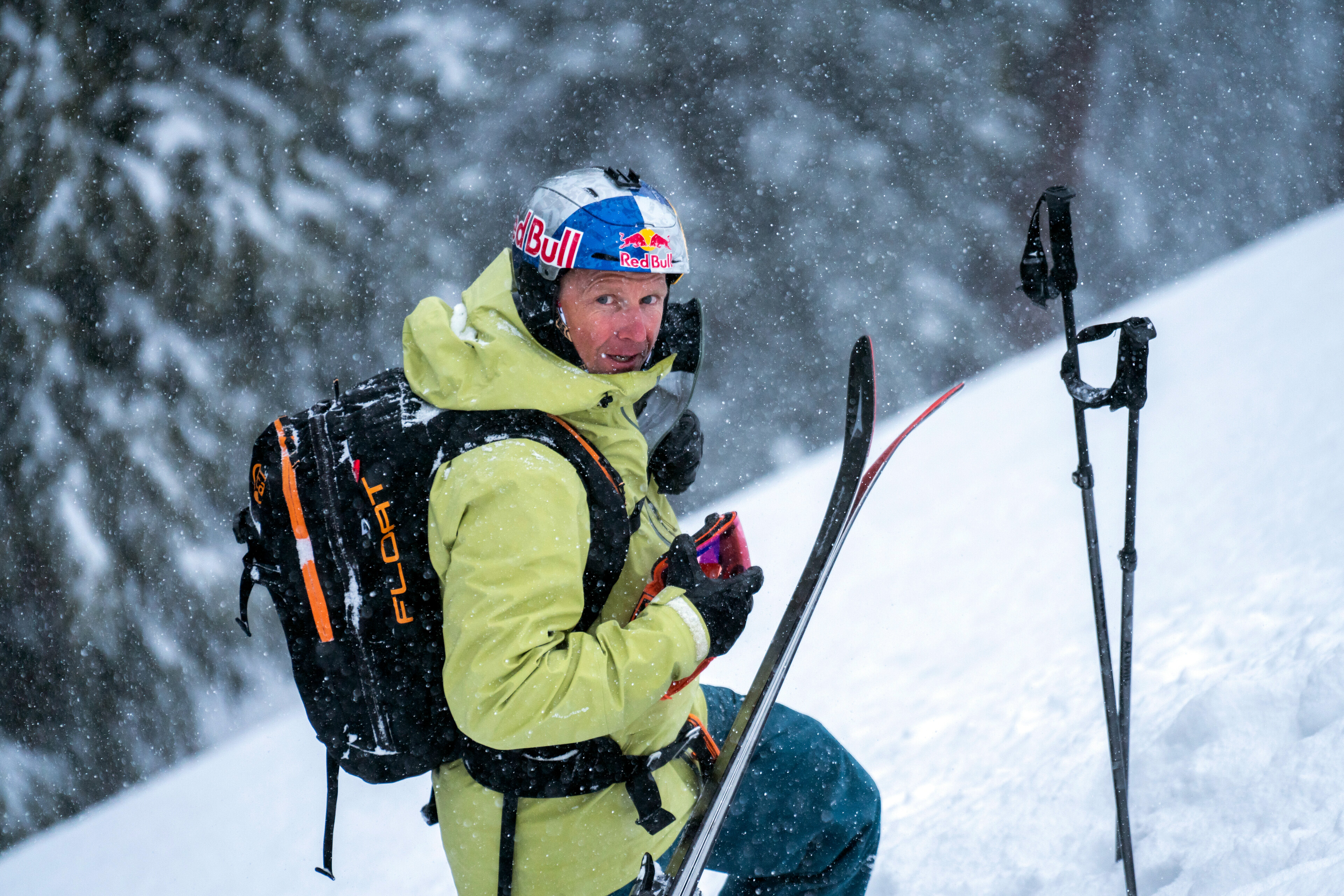
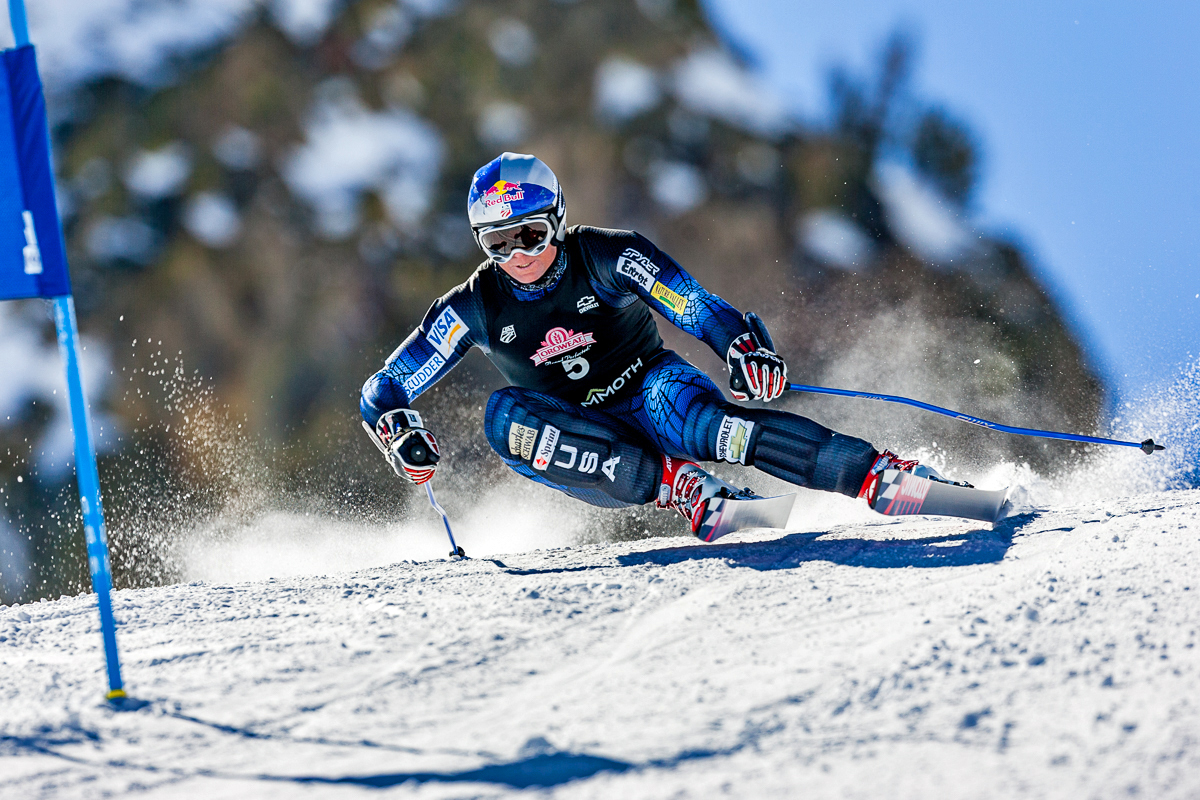
Daron Rahlves grew up skiing Tahoe in an era when kids learned as much by chasing older rippers through powder and off cliffs as they did training gates. Born in the Bay Area, he went on to become one of the most successful American speed skiers of his generation. In 2001, he captured gold in the super G at World Championships, and in 2003, he became only the second American to win the famed Hahnenkamm downhill, held each year in Kitzbühel, Austria. His nine World Cup downhill wins made him the winningest U.S. male downhiller of all time. Along the way, he competed in four Olympic Games, including as a Ski Cross athlete in Vancouver.
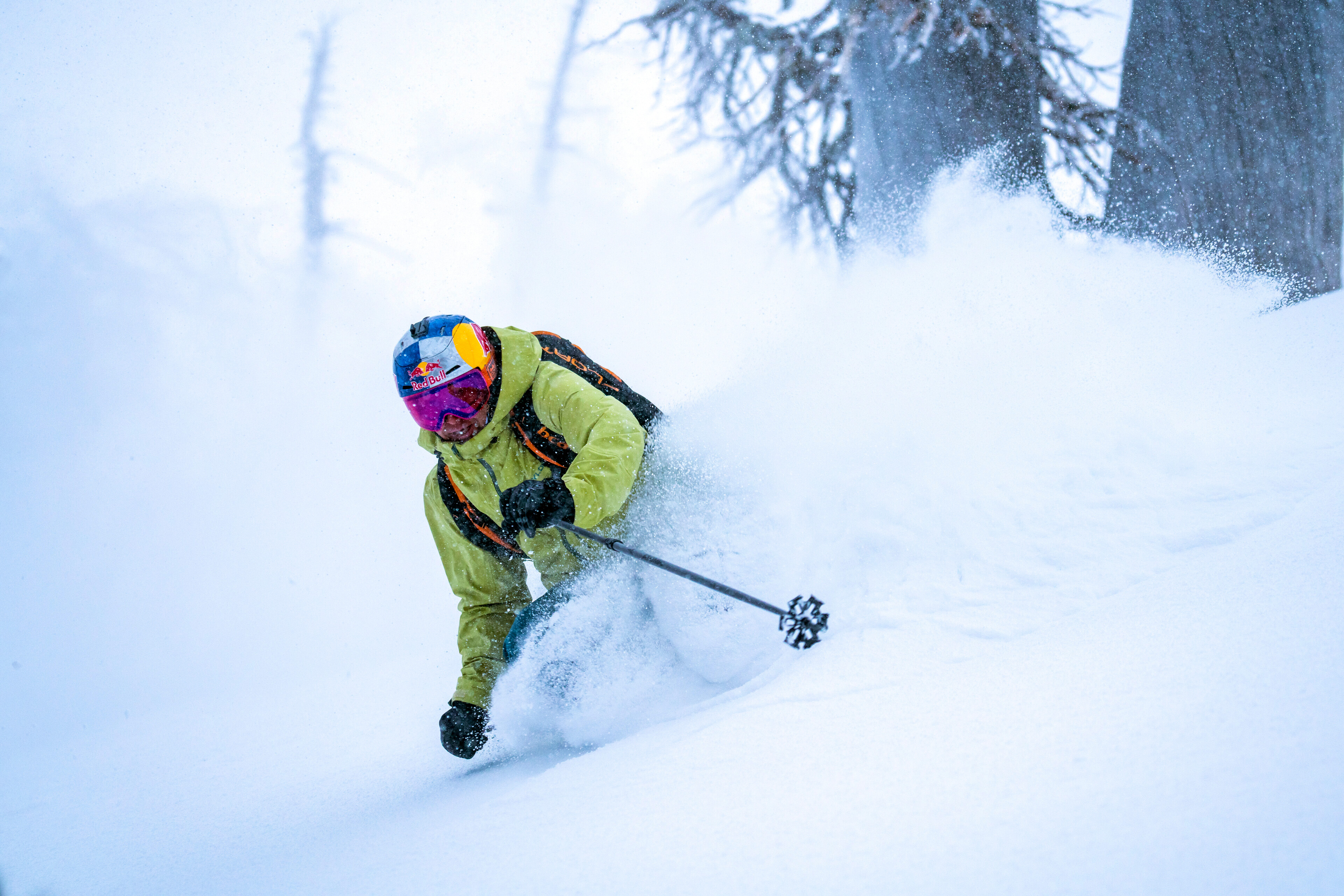
His post-race career has included film segments, ski cross competitions, and lots of big-mountain skiing. More recently, he became a part owner of the Chilkat Mountain Lodge in Alaska, where he helps tail-guide clients for his U.S. Ski Team buddy, Reggie Crist’s Stellar Adventure Travel Company.
Daron spoke with Cache_Seven contributor Gordy Megroz about how Tahoe shaped his style, how getting humbled in Vermont forced him to level up, and what’s on the horizon.
 (
Ming Poon care of
© Red Bull Media House)
(
Ming Poon care of
© Red Bull Media House)
Gordy: How did you first get into skiing?
Daron: It started as a family experience around Christmas vacation every year. My parents met in Aspen—my dad’s from Oakland and my mom’s from Austin—and going back there over Christmas break became a tradition until I was seven. I always loved the speed, and I remember, as I got older, I would try to see how fast I could ski from top to bottom.
Gordy: When did Tahoe become the center of your skiing?
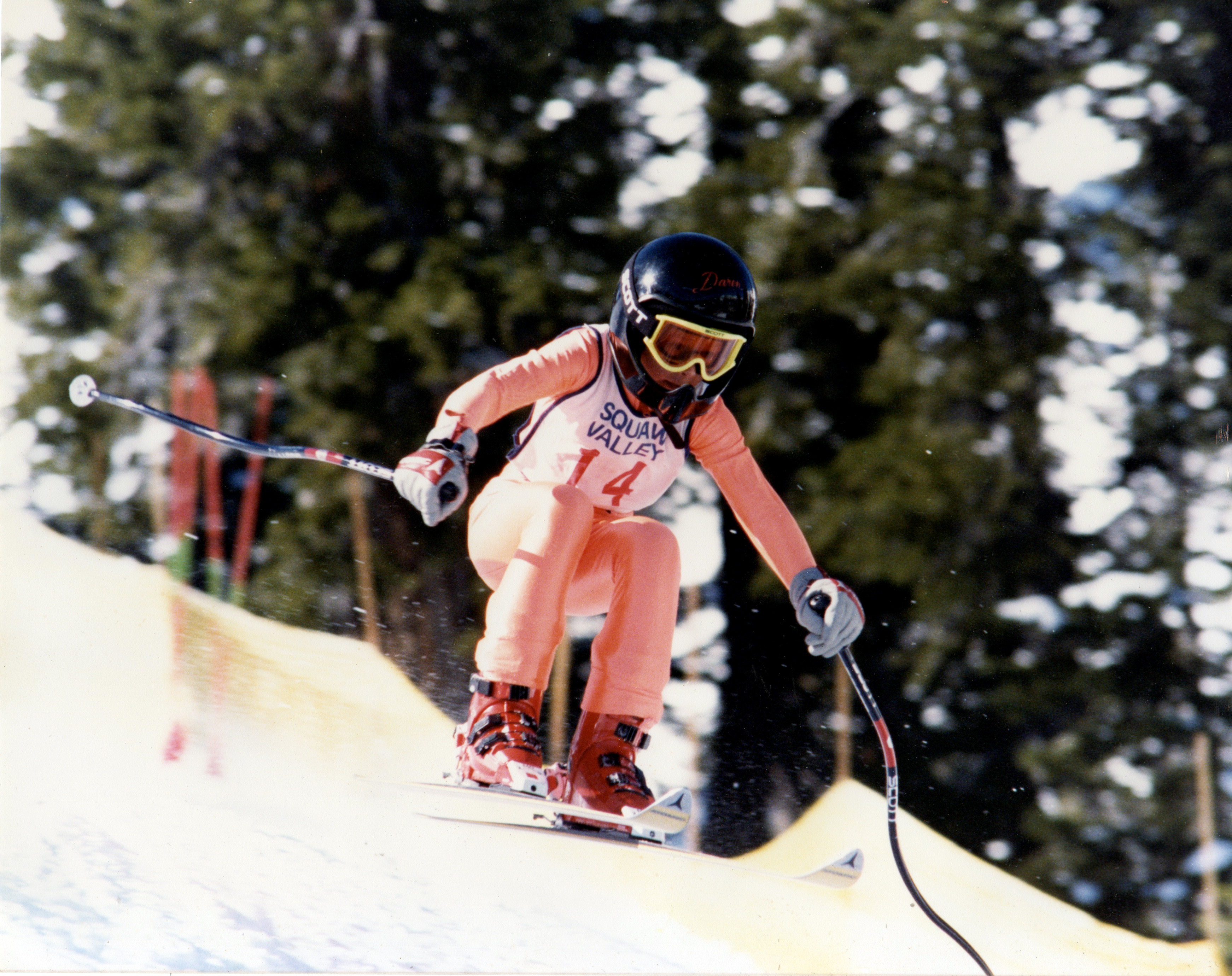
Daron: When I was seven, my parents bought a house in Alpine Meadows. That shifted our program from going to Aspen to driving up to Tahoe, and we were going more often. My sister and I got put into the Alpine Meadows ski club. On Saturdays we’d do a couple laps on the NASTAR course as a family, then my parents would drop us off with the team and go ski with friends. At that point, racing wasn’t really a thought—it was more just having buddies to ski with.
Some friends started racing around age 10, and I tried a couple real races. Things progressed pretty quickly. By age 12, my dad finally got sick of that I-80 drive in those gnarly Sierra storms when you’d be stuck for six or eight hours, and we moved up to Tahoe full time.
 (Care of Daron Rahlves)
Gordy: From then on, were you training gates all the time?
Daron: Not at all. There was always free skiing, and we’d be off messing around. I remember watching Todd Kelly, who was on the U.S. Ski Team at the time, sending it off big knolls on KT-22, and I’d try to chase him down and keep up. One of our coaches, Mark “Sully” Sullivan, used to say, ‘The best coach is KT-22.’ And it’s true. My style was big turns and going fast. I never had much interest in slalom. Downhill racing felt like you were just out there skiing the mountain instead of a course.
Gordy: How did you end up leaving Tahoe for a ski academy in Vermont?
Daron: A coach at Squaw who was from back east told me if I was serious, it was a lot more competitive there, and there were ski academies that were really established. My mom and I visited the big ones—Burke, Stratton, and Green Mountain Valley School (GMVS). GMVS seemed like the best fit. I committed as a boarding student, and I’d only come back to Tahoe at Christmas and in the spring.
Gordy: And then you found out how tough ski racing on the East Coast can be.
Daron: I got my ass whooped the first year. I went from being one of the top kids in the Far West to not even making Junior Olympics. That was hard. But it made me dig deep, get stronger, watch more video, put more time into my skis, talk to coaches about what I needed to do. I was also tiny. As a freshman I was 4'11" and 95 pounds. These other kids were like young men. I didn’t really develop the power until I was around 17.
Gordy: When did it start clicking?
Daron: Sophomore year I improved a little, junior year a little more, and then by senior year I was gaining steam. I was strong for my size, but once I started growing, things started to show. After high school, I talked to my parents about giving me another year to try to make the U.S. Ski Team. I hired a coach and trained at places like Sugarbush and in Colorado. But I didn’t make the team. I had gotten into the University of Colorado, but I deferred one more year, and that was the year I made the team.
 (Care of
Jonathan Selkowitz)
(Care of
Jonathan Selkowitz)
Gordy: What was your breakthrough after making the team?
Daron: In 1995, I went over to Norway to race my first World Cup after winning two NorAm races in Aspen. I was sick and I felt terrible. My ears were plugged up and I’m buckling my boots thinking, this isn’t good. I told myself: ‘It’s a minute and a half. I’m strong enough to go all in for a minute and a half. No expectations, let’s just see what I’ve got.’ I came in fourth.
Gordy: You talk about free skiing as a reset—like it reopens your creativity right before you race.
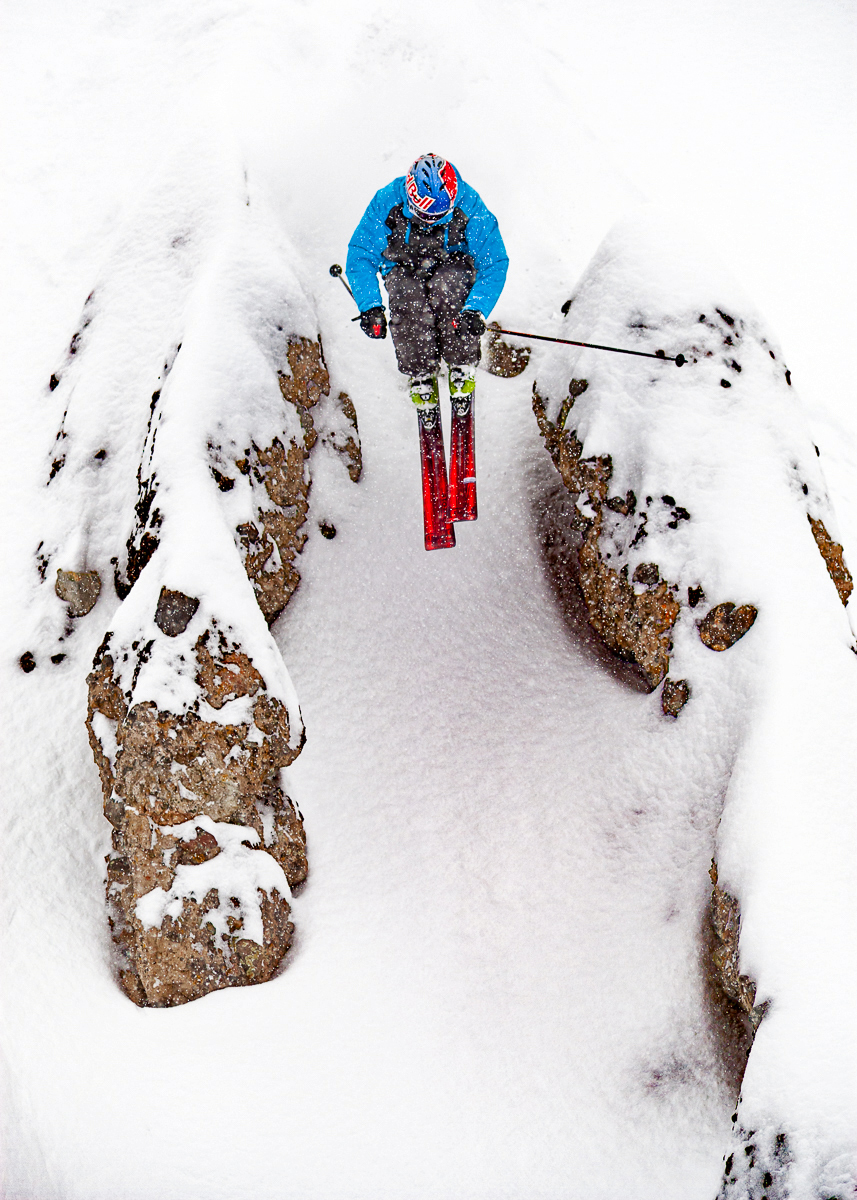
Daron: Totally. Free skiing was my release. Before my first two downhill wins in Kvitfjell, Norway, I was in Tahoe skiing deep powder with the freestyler Jonny Moseley and the freeskier Shane McConkey. Following Shane, I was seeing the mountain in a totally different way—new lines, drops, everything. Then I went to Norway with this playful mindset. I was warming up hitting little airs and grabs, and I wanted to bring that feeling into the race.
 (Care of Jonathan Selkowitz)
Gordy: You announced retirement early in 2006, even though you were still skiing great. Why?
Daron: People thought it was crazy. But I wanted to start a family, do something different, and end on my own terms. I didn’t want to be the guy who slows down, gets hurt, or hangs around in the top 20. I wanted to go out skiing as well as I could. It was time.
Gordy: Except you didn’t really retire; you raced ski cross at the 2010 Olympics.
Daron: I call it a transition. I still wanted to be competitive in something—I just didn’t want to be on the road all the time. I was trying to reinvent myself: still be outside, still ski, still chase that feeling.
 (
Ming Poon care of
© Red Bull Media House)
(
Ming Poon care of
© Red Bull Media House)
Gordy: What does that look like now?
Daron: I’m a part owner with Reggie Crist of Chilkat Mountain Lodge in Haines.
Reggie and his brother Zach got me to go to Alaska after those two downhill World Cup wins in Norway. They're like, ‘hell yeah, D, stoked for you. Now you have to come celebrate with us in Haines.’ That’s what sort of got me into my big mountain ski career—shooting movies with different film companies—and it got me hooked on Alaska. So, when Reggie asked me to buy the lodge with him, it seemed right. We bought it three years ago and we’ve been upgrading it constantly with a deck, sauna, cold plunge, hot tub, gym, game room, killer bar, and we have a great chef. I also go to races like Beaver Creek and Kitzbühel, do corporate ski events, meet people from different worlds—healthcare, finance, tech. Sharing this sport with people is important to me. No matter if it’s a big line in Alaska or if I’m out showing people around the Alps, everybody has a good time skiing.
Gordy: To me that sounds like the best part of a life on skis.
Daron: I’ve always thought of myself more as a skier than a ski racer. Ski racing was my career, and downhill was the most thrilling thing I could’ve done. But the love has always been about being in the mountains—being grateful, being wowed by terrain, and just having fun on skis.

Stay up to date with the latest trips and top tips from the world's best guides.
© 2025 - CACHE SEVEN INC