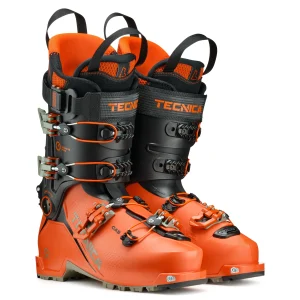
Last winter, I saw more than a dozen pairs of Tecnica Zero G Tour Pros on the feet of guides in the Northern Rockies.
Why the strong showing?
The legacy ski boot brand still builds boots for actual backcountry skiers.
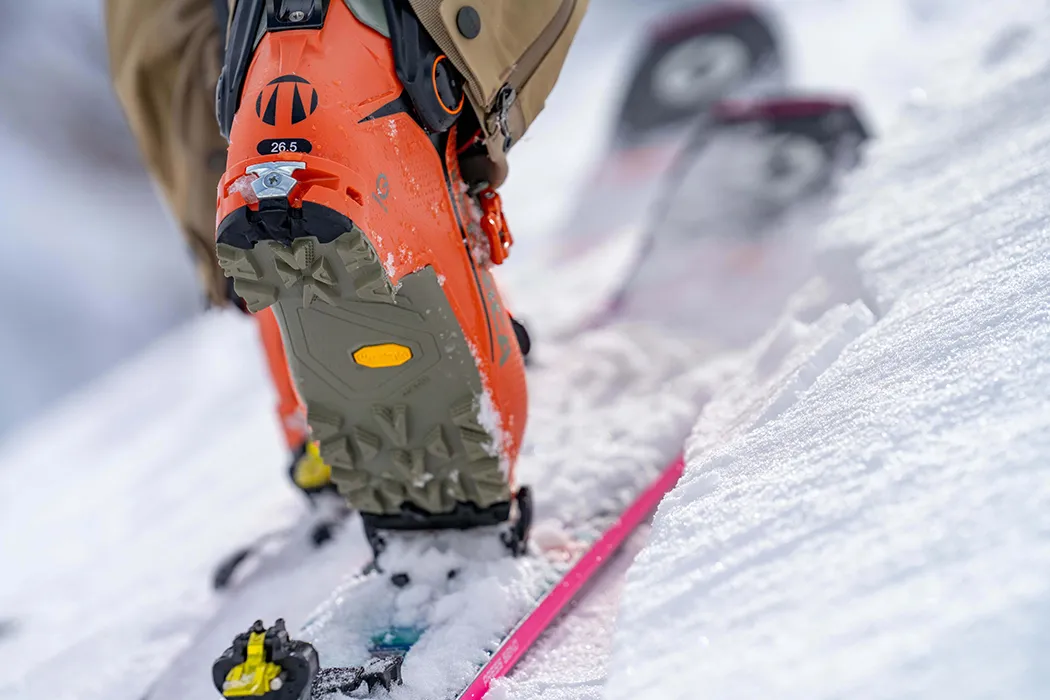
Last winter, I saw more than a dozen pairs of Tecnica Zero G Tour Pros on the feet of guides in the Northern Rockies.
Why the strong showing?
The legacy ski boot brand still builds boots for actual backcountry skiers.

Some quick context: The AT boot market is now loaded with featherweight, carbon fiber, two-buckle boots that are incredible efficient at going uphill, but underperform going down. The other option pushed by alpine brands are the burly crossover “freeride” boots that ski quite well, but crush you on the climb because of the weight penalty. It’s become hard to find do it all boots.
That’s nuts. Imagine if mountain bike companies only offered consumers the choice between world cup downhill bikes and hardtail XC race bikes and you’ll get what I’m driving at here. The boots 80 percent of the backcountry market would use 80 percent of the time are hard to find.
Except, that is, the revelation that is the Zero G Pro Tour from Tecnica.
The Zero G is a revelation for a few reasons. After putting 40 days on them, I can attest that they are the best uphill/downhill boots I've ever owned.


The first argument in favor of the Zero G has to do with flex tuning. It’s almost counterintuitive, but relatively stiff 140 or 150 flex overlap race boots offer some of the smoothest, most progressive flex patterns in the sport. That word progressive is the key to understanding, but it can come off as jargon. Progressive means that the flex gets incrementally stiffer as you load up the boots in a turn. If you nerd out on this stuff you know that a progressive flex beats a linear flex every time, because when a linear flex hits its terminus, it’s like bottoming out a shock. If you ever skied flimsy backcountry boots you know this blocky sensation. The boot flexes easily and then hits a wall. Backcountry skiers try to compensate for this dynamic by over-buckling the boot, but then the flex just stops. Performance skiing relies on a progressive flex. It’s how ski boots are supposed to work.

With the Zero G Pro Tour, which is designed as a traditional four buckle overlap, Tecnica got that smooth predictability right. It’s rated at a 130 flex, which might sound intimidating to some—they have softer versions—but see the note above about how smartly designed boots allow the flex to build to 130. That means that on snow in variable terrain, you don’t get bucked around. And that allows you to pressure the ski properly through the ball of the foot, get some ankle articulation, and keep your shins in the front of the boot where they belong.
My favorite thing about the Tecnica Tour Pro is that I don't have to compromise on uphill walkability or the skiing. They charge through every type of challenging snow condition. I prefer to put an Intuition wrap liner in them and a custom foot bed. But after that I don't have to think about them much.


The second characteristic that makes the Zero Gs so versatile is harder to feel on the ski shop floor. It has to do with lateral stiffness that works in concert with that progressive flex. On snow, you feel that by way of increased edge pressure, especially at the apex of the turn. That also matters for performance skiing. Maybe you won’t notice such precision in blower powder, but you will when you’re tipping the ski over on firm corn snow or traversing hard snow in the alpine. That type of control is essential with backcountry boots. Pin style tech bindings already rob a lot of control at the heel piece. Sloppy boots exacerbate that.
The weight-to-performance ratio is the best I've found. I don't hesitate to take them on international ski trips where boot choices are make or break decisions. I find the overall fit to be similar to a high-performance downhill boot, and the precision is comparable. For a four-buckle boot, the range of motion is fantastic. And the rockered Vibram soles make for solid contact while climbing in the alpine or boot packing.

Uphill performance matters too. And at 1,285 grams per boot, and with 65 degrees range of motion in tour mode—you flip the buckles forward and lift the burly lever for that—the Tour Pro rivals many of the uphill-focused boots I’ve tried. Again, for that 80 percent of skiers and 80 percent of days crowd, sacrificing downhill performance for more range of motion than that doesn’t pencil out. If you are into running uphill like a ski mountaineering racer, you aren’t looking for true uphill/downhill boots anyway.

Every review in The Cache gets at least one negative critique, and for me that’s an easy gripe. I aggressively downsize in ski boots because I was once a boot fitter and know that slop happens when you don’t. But even with that caveat, with the stock liners, the Zero G’s are unusually tough to get on when they’re cold. I’ve heard this from guides and random skiers as well. That’s not a problem when you’re booting up at the car or in the yurt, but it’s something to keep in mind for overnights. But then again, I always keep my boots warm in the sleeping bag anyway. Thin socks and some core strength help.

Here’s some more testimonial. Occasionally I’ll ski my Zero Gs inbounds with my freeride/AT Shift bindings so I can transition to to sidecountry skiing later in the day. That’s not an option with the purist uphill boots because they don’t have compatible toe and heel lugs. It’s that 80/80 note again. Backountry boots are big investments. Versatility is a must. Besides, traditional toe and heel lugs mean my sturdy bale style crampons work with the boots. And I have a fondness for traditional toe lugs in general because I’m convinced the pronounced lugs are better at kicking steps in snow and dirt.
I set this review up by saying the Zero G is the cream of the crop with do it all backcountry boots. And I stand by that. But the bigger takeaway is that this category of boot really matters. For the past 25 years I’ve only ever owned two types of boots at any given time: fixed cuff boots in the 130 to 140 flex range for mechanized skiing, and the best uphill/downhill boots I could find for the backcountry. I’ve tested freeride crossover boots and the superlight backcountry fare, but they aren’t for me. Like Cache_Seven guide Kailey McKenna, I don’t want to think about my boots after the initial fitting.
